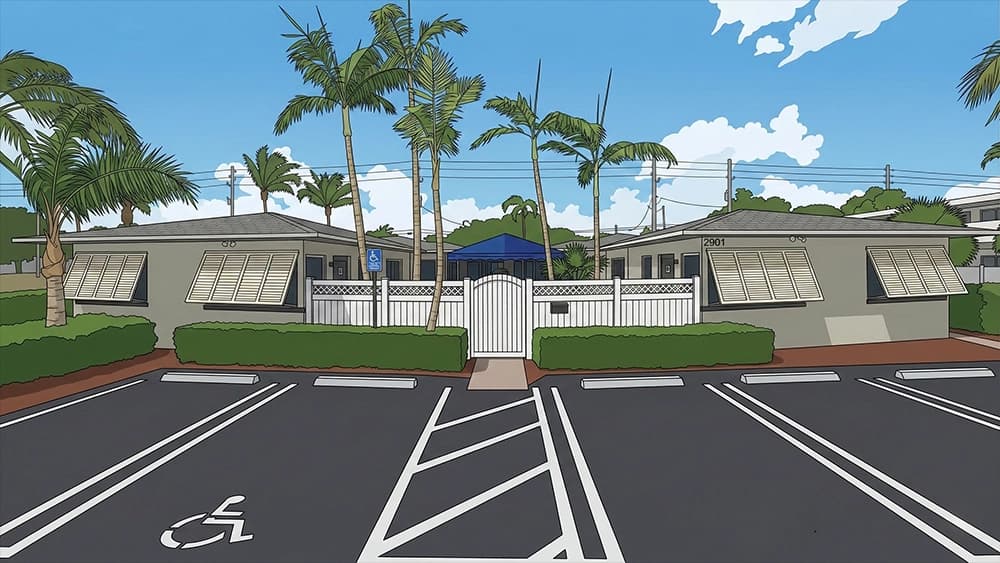
Outpatient rehab in West Palm Beach allows individuals to receive structured addiction treatment while maintaining daily responsibilities. Programs range from intensive outpatient (IOP) to standard outpatient therapy, each offering evidence-based care tailored to individual recovery needs.
- 1Outpatient rehab in West Palm Beach provides flexible, evidence-based addiction treatment that fits around work, school, and family commitments.
- 2Program options include intensive outpatient (IOP), partial hospitalization (PHP), and standard outpatient therapy—each suited to different levels of clinical need.
- 3A thorough clinical assessment determines which outpatient level matches your medical history, substance use severity, and home stability.
- 4Outpatient treatment often serves as a step-down from residential care or as a primary option for mild-to-moderate substance use disorders.
- 5Insurance coverage, scheduling flexibility, and proximity to local support systems make West Palm Beach outpatient rehab accessible to many individuals and families.
Finding the right outpatient rehab in West Palm Beach starts with understanding what's available, how programs are structured, and which level of care fits your situation. Whether you're stepping down from residential treatment or exploring outpatient as your first step, knowing the landscape helps you make an informed decision about your recovery.
What Outpatient Rehab Looks Like in West Palm Beach
Outpatient rehab allows you to receive professional addiction treatment without living at a facility full-time. You attend scheduled therapy sessions, group counseling, and clinical appointments, then return home. This format works for people who need structured support but also have responsibilities—jobs, family, school—that they can't set aside entirely.
West Palm Beach outpatient treatment programs generally fall into three tiers based on intensity and time commitment. The right tier depends on where you are in your recovery journey, the severity of your substance use, and your clinical needs.
Levels of Outpatient Care
Standard Outpatient Therapy
Standard outpatient care typically involves one to two sessions per week, each lasting about an hour. This level suits individuals with mild substance use concerns, strong motivation, and a stable support system. Sessions focus on individual therapy, relapse prevention, and ongoing skill development. Many people transition to standard outpatient after completing a more intensive program.
Intensive Outpatient Programs (IOP)
IOP provides 9–20 hours of programming per week, usually spread across three to five days. Sessions often run in the evenings or mornings, allowing participants to maintain work schedules. IOP includes group therapy, individual counseling, psychoeducation, and skills training. This level is appropriate for moderate substance use disorders or as a step-down from residential or PHP care.
Our drug addiction treatment programs include IOP options designed to provide meaningful clinical support while respecting your daily commitments.
Partial Hospitalization Programs (PHP)
PHP represents the most intensive outpatient level, typically running five to six hours per day, five days per week. Participants receive medical monitoring, psychiatric services, and structured therapeutic programming during the day, then return home in the evenings. PHP bridges the gap between residential care and less intensive outpatient formats, making it ideal for individuals who need close clinical oversight but have safe, substance-free housing.
Who Benefits Most from Outpatient Rehab
Outpatient rehab in West Palm Beach is a strong fit for several groups of people. Individuals with mild-to-moderate substance use disorders who have not experienced severe withdrawal complications often do well starting at an outpatient level. People stepping down from inpatient or residential treatment benefit from the continued structure and accountability that outpatient provides during the transition back to daily life.
Outpatient care also supports individuals who have completed medical detox and need ongoing therapeutic support without the residential component. If your home environment is stable, your support system is engaged, and you're motivated to participate consistently, outpatient treatment can be highly effective.
However, outpatient is not the right starting point for everyone. People experiencing active withdrawal, severe medical complications, or unsafe home environments may need residential or inpatient care first. A clinical assessment helps clarify the safest and most effective entry point for your situation.
What to Expect During Treatment
A typical outpatient experience begins with a comprehensive clinical assessment. The intake team reviews your substance use history, medical background, mental health status, and social circumstances. Based on that evaluation, the team recommends a specific outpatient level and develops a personalized treatment plan.
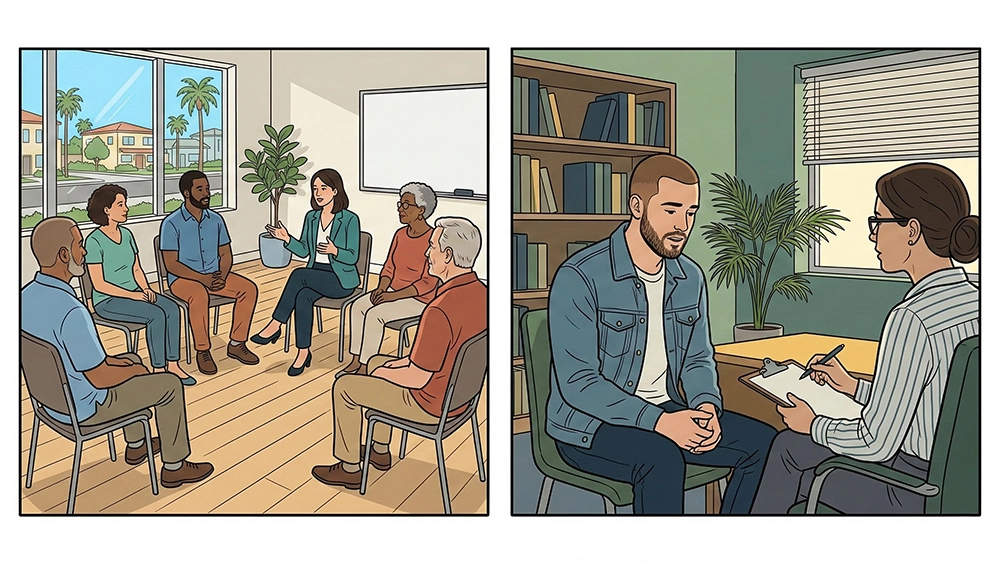
Once enrolled, your week includes a combination of individual therapy sessions, group counseling, and educational programming. Evidence-based approaches like cognitive-behavioral therapy (CBT), motivational interviewing, and dialectical behavior therapy (DBT) are commonly used. Many programs also incorporate family therapy, medication management, and wellness activities.
Progress is monitored through regular check-ins with your clinical team. As you build stability and demonstrate consistent engagement, your care plan may be adjusted—stepping down to fewer sessions per week or transitioning to alumni support programming.
The Role of Outpatient Care in Long-Term Recovery
Recovery doesn't end when formal treatment concludes. Outpatient rehab builds the skills and habits that sustain sobriety over time. Learning to manage triggers, developing healthy coping mechanisms, strengthening relationships, and building community connections all happen in the outpatient setting where you're practicing recovery in your real environment.
For many people, outpatient also addresses co-occurring conditions like depression, anxiety, or trauma. Integrated treatment ensures that mental health needs receive attention alongside substance use, reducing the risk of relapse driven by untreated psychiatric symptoms.
Our alcohol addiction treatment programs and drug treatment services are designed with this integrated model in mind, providing clinical depth across multiple concerns simultaneously.
Practical Considerations: Access and Insurance
Choosing outpatient rehab in West Palm Beach involves practical factors beyond clinical fit. Location, scheduling, transportation, and insurance coverage all matter. Programs located close to home or work reduce barriers to consistent attendance. Evening and weekend session options accommodate diverse schedules.
Insurance coverage for outpatient treatment varies by plan and provider. Many commercial insurance plans, Medicaid, and Medicare cover outpatient addiction treatment, though pre-authorization may be required. Understanding your benefits before starting helps avoid surprises and ensures continuity of care.
When you're ready to explore coverage, our admissions team can help. You can verify your insurance online or call to discuss your specific plan and benefits.
Taking the Next Step
If you or someone you care about is considering outpatient rehab in West Palm Beach, the most important step is reaching out. A confidential conversation with a treatment professional can clarify your options, answer questions, and help you understand what to expect.
At Amity BH, we provide comprehensive outpatient programming—from intensive outpatient and PHP to standard therapy—within a supportive, evidence-based clinical environment. Our team works with you to build a care plan that respects your life circumstances while providing the structure and accountability recovery demands.
Call us at (888) 833-3228 to speak with our admissions team. We can discuss your situation, explain program options, verify insurance, and guide you toward the right level of care. You can also start with insurance verification online.
Recovery is a process, and outpatient rehab can be the foundation that supports lasting change.
This content is for informational purposes only and does not constitute medical advice. Please consult a qualified healthcare professional for personalized guidance.
Frequently Asked Questions
What types of outpatient rehab are available in West Palm Beach?
West Palm Beach offers several outpatient levels, including standard outpatient therapy (1–2 sessions per week), intensive outpatient programs (IOP) with 9–20 hours per week, and partial hospitalization programs (PHP) with 5–6 hours per day. Each level provides structured therapy, group counseling, and clinical support tailored to individual needs.
How do I know if outpatient rehab is right for me?
Outpatient rehab works well for individuals with mild-to-moderate substance use disorders, stable housing, a supportive home environment, and the ability to manage daily responsibilities. A clinical assessment evaluates your medical history, withdrawal risk, and support system to determine the appropriate level of care.
Can I work while attending outpatient rehab in West Palm Beach?
Yes. Outpatient programs are designed with scheduling flexibility in mind. Many IOP sessions run in the evenings or on weekends, and standard outpatient appointments can be scheduled around work hours. This flexibility is one of the primary reasons people choose outpatient care.
What does a typical outpatient rehab session include?
Sessions typically include individual therapy, group counseling, psychoeducation, relapse prevention planning, and skill-building exercises. Some programs also offer medication management, family therapy, and psychiatric services depending on clinical needs and program intensity.
How do I get started with outpatient rehab at Amity BH?
Call Amity BH at (888) 833-3228 to speak with our admissions team. We can conduct an initial screening, discuss program options, verify your insurance coverage, and help coordinate your intake. You can also begin by visiting our insurance verification page online.
Sources & References
This article is based on peer-reviewed research and authoritative medical sources.
- Treatment for Substance Use Disorders — Substance Abuse and Mental Health Services Administration (SAMHSA) (2025)
- Principles of Drug Addiction Treatment: A Research-Based Guide — National Institute on Drug Abuse (NIDA) (2024)
- Outpatient Treatment for Substance Use Disorders — SAMHSA National Helpline (2024)
Amity BH Clinical Team
Amity BH Clinical Team is part of the clinical team at Amity Behavioral Health, dedicated to providing evidence-based treatment and compassionate care for individuals struggling with addiction and mental health challenges.
Related Programs & Resources
Learn more about our treatment programs and how we can help you recover.
Related Articles
 Outpatient Care Pathways
How Long Does an IOP Program Last?
Learn how long an IOP program lasts, what changes timeline length, and when to step up or down care. Call Amity BH today.
 Outpatient Care Pathways
Outpatient Addiction Treatment Program: What It Includes
Learn what an outpatient addiction treatment program includes, who it fits, and how to start care in West Palm Beach. Call Amity BH today.
 Outpatient Care Pathways
What to Expect at Your First Outpatient Rehab Appointment
Learn what happens at your first outpatient rehab appointment, from intake to treatment planning. Reduce anxiety and prepare with confidence. Call Amity BH today.
Ready to Start Your Recovery?
Our compassionate team is available around the clock to answer your questions and help you take the first step toward a healthier life.
Confidential. Compassionate. Available when you need us.