Is Addiction a Disease? Understanding the Science Behind Substance Use Disorder
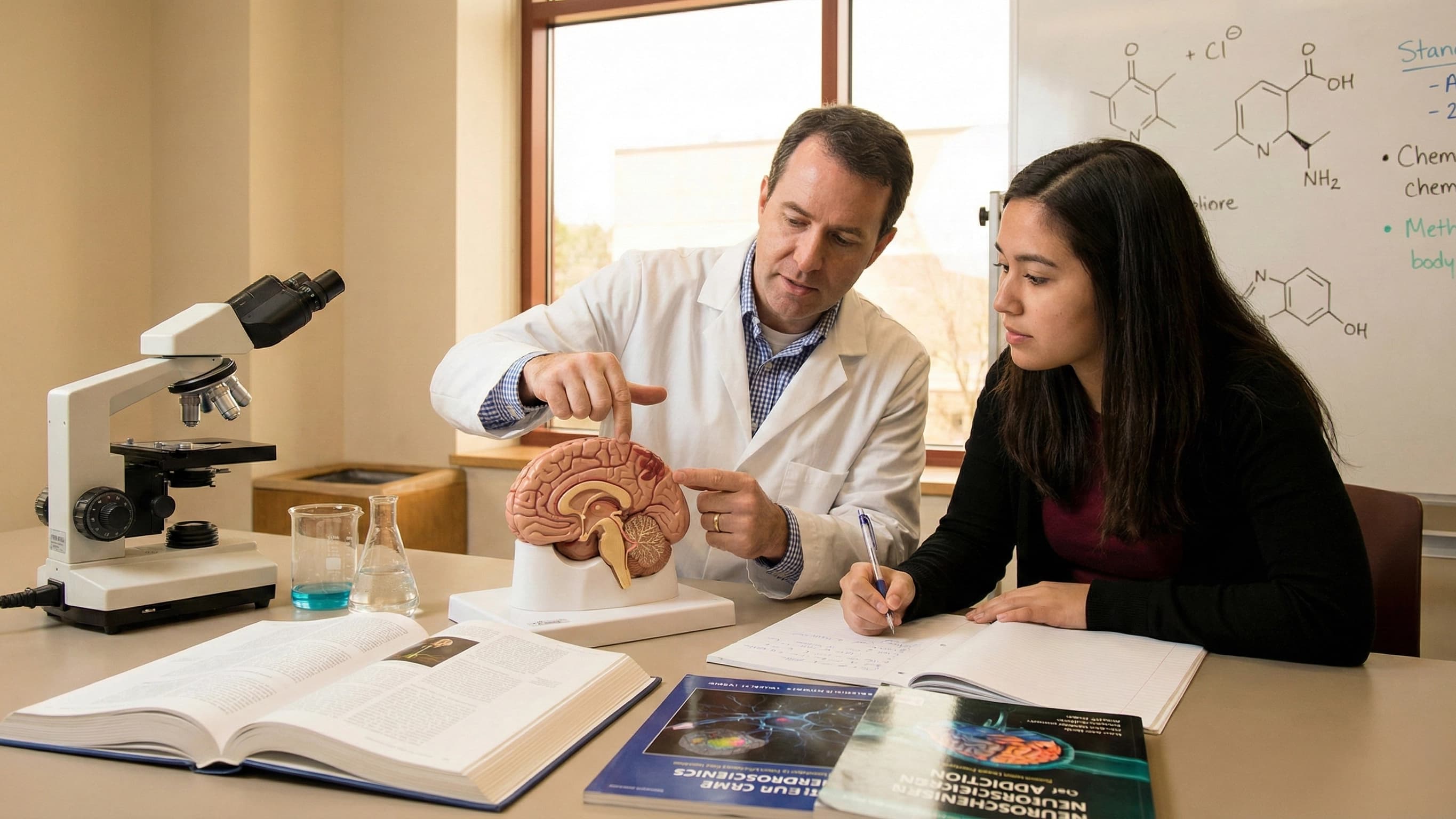
Addiction is recognized as a chronic brain disease by every major medical organization. Brain imaging studies show measurable changes in the reward system, decision-making centers, and stress circuits. Like diabetes or hypertension, it has genetic components, responds to evidence-based treatment, and requires ongoing management. Understanding addiction as a disease reduces stigma, expands insurance coverage, and helps families stop blaming themselves or their loved one.
- 1Every major medical organization classifies addiction as a chronic brain disease
- 2Brain imaging studies show measurable changes in dopamine pathways and the prefrontal cortex
- 3Genetic factors account for 40-60% of a person's vulnerability to addiction
- 4The DSM-5 defines substance use disorder on a spectrum from mild to severe based on 11 clinical criteria
- 5Relapse rates for addiction (40-60%) mirror those of diabetes and hypertension
- 6The disease model does not remove personal responsibility — treatment requires active participation
Few questions in healthcare generate as much debate as whether addiction is truly a disease. For families watching a loved one struggle, the answer can feel deeply personal. For the person caught in the cycle of substance use, it can mean the difference between seeking help and believing they simply lack willpower.
The scientific and medical consensus is clear: addiction is a chronic brain disease. Understanding why — and what that means for treatment and recovery — can change how you think about substance use disorder and the people affected by it.
What the Medical Community Says
Every major medical organization in the world classifies addiction as a disease. The American Medical Association has recognized it as such since 1987. The American Society of Addiction Medicine, the National Institute on Drug Abuse, and the World Health Organization all agree.
Most recently, the federal government reinforced this position through the Great American Recovery Initiative, an executive order signed in January 2026 that explicitly recognizes addiction as a "chronic, treatable disease" at the policy level. This language matters because it shapes how federal agencies fund research, design treatment programs, and set insurance requirements.
This is not a fringe position or a matter of opinion. It is the settled consensus of the medical establishment, grounded in decades of neuroscience research.
How Addiction Changes the Brain
To understand why addiction qualifies as a disease, you need to understand what it does to the brain. Substance use does not just create a habit. It physically restructures how the brain functions.
The Reward System
Every substance that can lead to addiction — alcohol, opioids, stimulants, benzodiazepines — acts on the brain's reward system. This system, centered on a neurotransmitter called dopamine, evolved to reinforce behaviors essential for survival like eating and social bonding.
When a person uses an addictive substance, the brain releases a surge of dopamine far beyond what any natural reward produces. Over time, the brain adapts to these artificial floods of dopamine by producing less of it naturally and reducing the number of dopamine receptors available to receive it. The result is a brain that can no longer experience normal levels of pleasure from everyday activities. The person needs the substance just to feel baseline normal.
This is not a matter of willpower. It is a measurable, physical change in brain chemistry.
The Prefrontal Cortex
The prefrontal cortex — the part of the brain responsible for judgment, decision-making, impulse control, and weighing consequences — is particularly affected by chronic substance use. Brain imaging studies using PET scans and functional MRI have shown reduced activity in this region among people with substance use disorders.
This matters because the prefrontal cortex is precisely the part of the brain a person would need to "just decide to stop." Addiction impairs the very mechanism responsible for self-control. Telling someone with a substance use disorder to simply choose differently is like telling someone with a broken leg to simply walk normally.
Stress Circuits
Addiction also rewires the brain's stress response system. As the reward system becomes dulled, the brain's stress circuits become hyperactive. The person experiences increased anxiety, irritability, and emotional pain when not using the substance. This creates a powerful negative reinforcement cycle — the person uses not to feel good, but to stop feeling bad.
These three changes — a compromised reward system, impaired decision-making, and an overactive stress response — are not abstract concepts. They have been documented through brain imaging studies at institutions including the National Institutes of Health, Harvard Medical School, and research universities worldwide.
The Evidence for the Disease Model
Brain Imaging Studies
Advances in neuroimaging technology have allowed researchers to observe addiction's effects on the brain in real time. PET scans show decreased dopamine receptor availability in people with alcohol, cocaine, methamphetamine, and opioid use disorders. Functional MRI studies reveal reduced activity in the prefrontal cortex during decision-making tasks. These changes are consistent across different substances and different populations, pointing to a common neurological mechanism underlying all addictions.
Genetic Predisposition
Research consistently shows that genetic factors account for approximately 40 to 60 percent of a person's vulnerability to developing addiction. Studies of twins, adopted children, and families have demonstrated that the risk of substance use disorder is significantly higher for individuals with a family history of addiction, even when raised in different environments.
This genetic contribution is comparable to the heritability of other chronic diseases. Type 2 diabetes, for example, also has a genetic component of roughly 40 to 60 percent. No one argues that diabetes is simply a lifestyle choice.
The Chronic Relapsing Pattern
One of the strongest arguments for the disease model is how addiction behaves over time. Substance use disorder follows a chronic relapsing pattern that closely mirrors other recognized chronic diseases.
Relapse rates for addiction fall between 40 and 60 percent. Compare this to:
- Type 1 diabetes: 30 to 50 percent of patients fail to adhere to treatment
- Hypertension: 50 to 70 percent of patients fail to follow medication regimens
- Asthma: 50 to 70 percent of patients fail to adhere to treatment plans
When a person with hypertension stops taking their medication and their blood pressure spikes, we do not say their disease was not real. We adjust treatment. The same logic applies to addiction. Relapse is not evidence that treatment failed — it is a signal that treatment needs to be modified.
What the DSM-5 Says
The Diagnostic and Statistical Manual of Mental Disorders, Fifth Edition — the standard reference used by clinicians to diagnose mental health conditions — uses the term "substance use disorder" and defines it based on 11 clinical criteria organized into four categories:
Impaired Control
- Taking the substance in larger amounts or for longer than intended
- Wanting to cut down but being unable to
- Spending excessive time obtaining, using, or recovering from the substance
- Experiencing cravings
Social Impairment
- Failing to fulfill major obligations at work, school, or home
- Continuing use despite social or relationship problems
- Giving up important activities because of substance use
Risky Use
- Using in physically dangerous situations
- Continuing use despite knowing it is causing physical or psychological harm
Pharmacological Indicators
- Tolerance — needing more of the substance to achieve the same effect
- Withdrawal — experiencing physical symptoms when stopping
The severity exists on a spectrum: mild (2-3 criteria met), moderate (4-5 criteria), or severe (6 or more criteria). This framework reflects the medical reality that substance use disorder is not an all-or-nothing condition. It develops along a continuum, and treatment should be tailored accordingly.
Addressing the Counterargument: What About Personal Responsibility?
The most common objection to calling addiction a disease is that it appears to remove personal responsibility. If addiction is a disease, the argument goes, then the person cannot be held accountable for their behavior.
This reflects a fundamental misunderstanding of how chronic diseases work.
Having diabetes does not excuse a person from managing their blood sugar. Having hypertension does not mean someone can ignore their medication and salt intake. These are diseases that require active, daily participation in treatment. No one considers that participation optional simply because the underlying condition is medical.
Addiction works the same way. Recognizing it as a disease does not mean the person bears no responsibility. It means their brain has been changed in ways that make recovery genuinely difficult — but not impossible. Treatment requires effort. Recovery demands commitment. The person must show up for therapy, develop new coping skills, build a support system, and make difficult choices every day.
The disease model does not excuse behavior. It explains it. And that explanation opens the door to effective, evidence-based treatment rather than punishment and shame.
Why This Framing Matters
Whether we call addiction a disease has real consequences for millions of people.
Reducing Stigma
Stigma remains one of the biggest barriers to treatment. When addiction is viewed as a moral failing, people hide their condition, delay seeking help, and avoid disclosing their struggles to healthcare providers. The federal data cited in the Great American Recovery Initiative found that 95.6 percent of untreated adults with substance use disorder reported they did not think they needed treatment. Stigma fuels that perception gap.
When addiction is understood as a medical condition, the conversation shifts. People are more likely to seek help when they believe they have a treatable illness rather than a character flaw.
Expanding Insurance Coverage
The disease classification has direct implications for insurance coverage. Mental health parity laws require insurers to cover substance use disorder treatment comparably to other medical conditions. When addiction is recognized as a disease at the federal level — as the Great American Recovery Initiative reinforces — it strengthens the legal and regulatory framework for coverage.
This means more people can access residential treatment, outpatient programs, medication-assisted treatment, and the full continuum of care that effective recovery requires.
Helping Families
Families of people with substance use disorders often carry tremendous guilt. Parents wonder what they did wrong. Spouses question whether they enabled the behavior. Siblings ask whether they should have intervened sooner.
Understanding addiction as a disease does not erase the pain. But it does help families stop blaming themselves and their loved one. It redirects energy from guilt and blame toward treatment and support — which is where that energy can actually make a difference.
How Amity Behavioral Health Treats Addiction as a Medical Condition
At Amity Behavioral Health, we do not treat addiction as a moral failing, a lack of discipline, or a choice. We treat it as the chronic medical condition the science shows it to be, using evidence-based clinical approaches designed to address the brain changes that drive substance use disorder.
Our approach includes:
- Medical detoxification with 24/7 clinical monitoring to safely manage withdrawal
- Medication-assisted treatment using FDA-approved medications that help normalize brain chemistry
- Evidence-based therapies including cognitive behavioral therapy, dialectical behavior therapy, and trauma-informed care
- Dual diagnosis treatment addressing co-occurring mental health conditions that frequently accompany substance use disorders
- Individualized treatment plans because the disease manifests differently in every person
- Continuum of care from residential treatment through outpatient programs and aftercare support
Recovery is possible. The science that explains why addiction is so difficult also points the way toward effective treatment. If you or someone you love is struggling with substance use disorder, understanding that it is a medical condition — not a personal failure — is the first step toward getting the help that works.
Contact Amity Behavioral Health at (888) 833-3228 for a free, confidential consultation. Our admissions team can verify your insurance and help you understand your treatment options.
Frequently Asked Questions
Is addiction a choice or a disease?
The initial decision to use a substance may involve choice, but repeated use causes measurable changes in brain structure and function that impair a person's ability to control their behavior. Every major medical organization — including the American Medical Association, the National Institute on Drug Abuse, and the World Health Organization — classifies addiction as a chronic brain disease.
If addiction is a disease, does that mean people aren't responsible for their recovery?
No. Like any chronic disease, addiction requires active participation in treatment. A person with diabetes must manage their diet, take medication, and monitor their condition. Similarly, a person with substance use disorder must engage in treatment, develop coping strategies, and make daily choices that support recovery. The disease model explains why someone can't simply 'choose to stop' — it doesn't eliminate the need for personal effort in recovery.
What does the DSM-5 say about addiction?
The DSM-5 uses the term 'substance use disorder' and defines it based on 11 clinical criteria including impaired control, social impairment, risky use, and physiological indicators like tolerance and withdrawal. The severity is classified as mild (2-3 criteria), moderate (4-5 criteria), or severe (6 or more criteria).
Can addiction be cured?
Addiction is a chronic condition that can be effectively managed but not cured in the traditional sense. Like diabetes or hypertension, ongoing management is necessary. However, many people achieve long-term recovery and live fulfilling, substance-free lives with proper treatment and support.
Is there a genetic component to addiction?
Yes. Research shows that genetic factors account for approximately 40-60% of a person's vulnerability to addiction. However, genetics alone don't determine whether someone develops a substance use disorder — environmental factors, mental health, trauma, and access to substances all play important roles.
Sources & References
This article is based on peer-reviewed research and authoritative medical sources.
- Drugs, Brains, and Behavior: The Science of Addiction — National Institute on Drug Abuse (2024-06-01)
- Diagnostic and Statistical Manual of Mental Disorders, Fifth Edition (DSM-5) — American Psychiatric Association (2013-05-01)
- The Great American Recovery Initiative Executive Order — The White House (2026-01-29)
Amity BH Clinical Team
Amity BH Clinical Team is part of the clinical team at Amity Behavioral Health, dedicated to providing evidence-based treatment and compassionate care for individuals struggling with addiction and mental health challenges.
Related Programs & Resources
Learn more about our treatment programs and how we can help you recover.
Related Articles
 Treatment
How to Start Addiction Recovery with Self-Help Methods
Only 20% of people with substance use disorders receive professional treatment. Self-help methods provide vital support while working toward or alongside professional care.
Addiction Treatment for Professionals: A Guide for High-Achievers
44% of adults use alcohol or drugs to manage stress. High-functioning addicts seek help 5-8 years later than others. Specialized professional treatment addresses unique needs.
Substance Abuse in Adolescence: What Parents Should Know
Children of parents with substance use disorders face up to 8x higher risk of developing addiction. Early intervention and open communication are essential for protecting adolescents.
Ready to Start Your Recovery?
Our compassionate team is available around the clock to answer your questions and help you take the first step toward a healthier life.
Confidential. Compassionate. Available when you need us.